Donna Haraway and architecture
Donna Haraway has a great influence on contemporary architecture, that values the existing and rejects the tabular rasa format
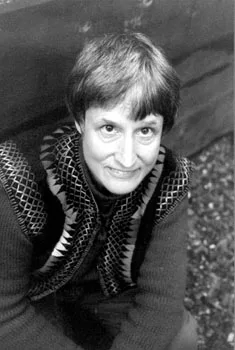
In the article "[Feminist Studies vol. 14 iss. 3] Donna Haraway - Situated Knowledges_ The Science Question in Feminism and the Privilege of Partial Perspective (1988)", Donna Haraway critiques traditional scientific objectivity as the "god trick," an illusion of seeing everything comprehensively from an unmarked, disembodied viewpoint. To counter this, she proposes a framework of feminist objectivity defined strictly as "situated knowledges".
Embodied Vision: Objectivity relies on particular, specific embodiment and partial perspective, rather than false promises of transcendence or limitless, disembodied vision.
Rejection of Relativism: Both relativism and totalization are dismissed as "god tricks" because they deny the stakes in physical location and make it impossible to see the world accurately.
Privileging the Subjugated: The viewpoints of subjugated groups are preferred because they are knowledgeable about modes of denial and are least likely to ignore the critical, interpretive core of all knowledge.
The World as an Active Agent: The object of knowledge is not a passive resource or raw material for human appropriation, but an active, meaning-generating actor, which Haraway metaphorically likens to a witty trickster or Coyote.
Translating "Situated Knowledges" to Architectural Practice
The file "Architectural Practice" directly transposes Haraway’s epistemology into spatial design, defining "situated practice" as the production of architecture anchored in lived contexts rather than abstract, universal perspectives. This theoretical shift fundamentally redefines the architect's relationship to the site and the design process.
Rejecting the Tabula Rasa: Architects must abandon the reflex of treating a site as a "blank slate" and avoid imposing pre-established, formal concepts from the top down.
Contextual Anchoring: Design must emerge directly from the specificities of the place, intimately integrating its climate, local materials, actual uses, and cultural memories.
Valuing the "Déjà-Là": Situated practice prioritizes the preservation and reinterpretation of existing structures and conditions over demolition, treating the existing environment as a foundational asset.
Post-Anthropocentric and Material Ecologies
Embracing Haraway's vision of an active, agential world shifts architectural practice away from seeing nature as a passive backdrop, moving the profession toward systemic and post-anthropocentric ecologies.
Open Systems: Architecture must be conceptualized as an interconnected open system that interacts continuously with the broader biosphere, rather than functioning as a closed, isolated object.
Geological Consciousness: The environment is treated as an active participant, requiring the acknowledgment that all building materials are extracted from the Earth and are part of a deep geological cycle.
Material Ecologies: Sustainable practice demands a focus on localized material economies, utilizing bio-sourced elements, low-tech assemblies, and the rigorous reuse of salvaged structures.
Multi-Species Cohabitation: Buildings are reconceptualized as porous environments designed to host active cohabitation between humans and non-human entities, transforming architecture into a mediator for local flora, fauna, and micro-organisms.